

Full details
Artist Ahmed Rizk returns nearly 20 years after portraying a young man with autism in the 2006 film "Al-Turbini" to revisit the issue of autism through the series "The Blue Color," which focuses on the challenges of integrating children with autism into Egyptian society.
Portraying the Role of a Father Facing Autism Challenges
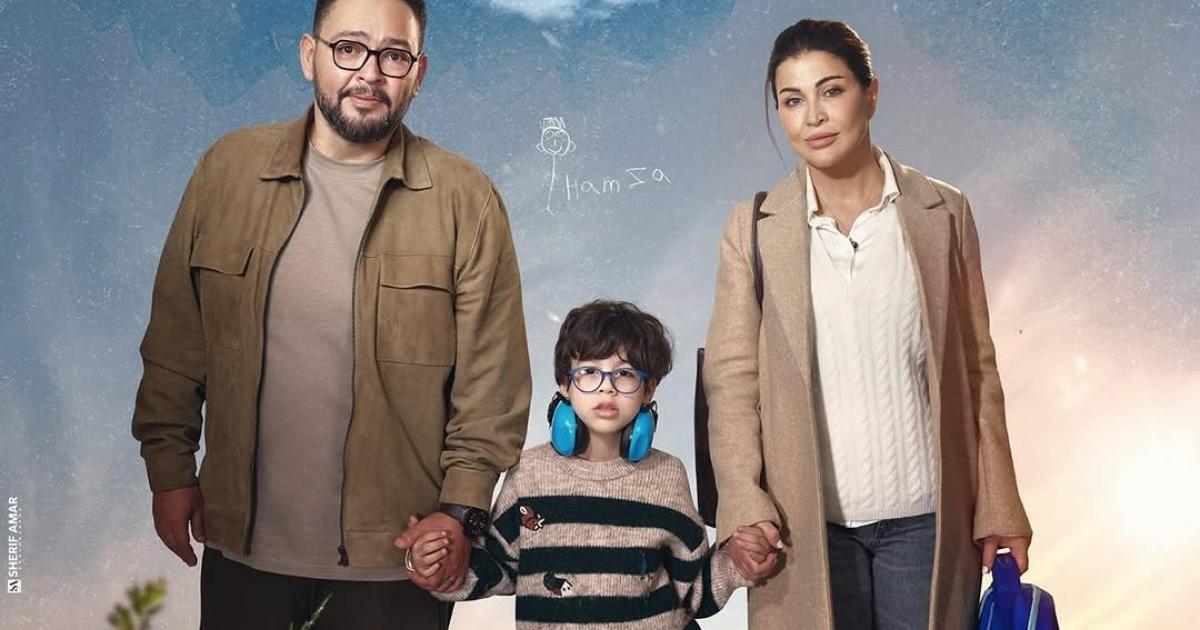
In this new work, Ahmed Rizk plays the role of a married engineer who has a son named "Hamza" suffering from autism spectrum disorder. The series revolves around the family's efforts to integrate the child into society and cope with the associated difficulties, especially after their return to live in Egypt following a period abroad.
A New Artistic Partnership with Joumana Murad
Joumana Murad co-stars alongside Ahmed Rizk, expressing her happiness to collaborate with him for the first time despite their long acquaintance, which helped facilitate a positive working atmosphere between them. This collaboration adds a human and artistic dimension to the series and strengthens the impact of its message.
Background of the Issue and Its Ongoing Importance
The series "The Blue Color" continues a humanitarian issue previously addressed by Ahmed Rizk in the film "Al-Turbini," emphasizing that autism remains a vital and important topic amid the increasing number of children diagnosed with it. He clarified that autism is not a disease in the traditional sense but a condition requiring genuine societal understanding and support to enable those affected to integrate naturally.
Artistic and Human Challenges in the Work
Ahmed Rizk pointed out that the series presents many artistic and human challenges, as portraying a father dealing with the reality of autism demands special sensitivity and depth in performance. He also affirmed that this experience was among the most beautiful in his artistic career due to the important humanitarian message it conveys toward children with autism.
The Work's Significance in the Artistic and Social Scene
"The Blue Color" comes at a time when interest in mental health issues and developmental disorders is growing in Egypt and the Arab world, making the series of great artistic and social value. It is expected to contribute to raising awareness and societal understanding of autism and encourage support for integrating children with autism into schools and local communities.
The Role of Media and Art in Supporting Autism Issues
The series "The Blue Color" exemplifies how art and media can be effective tools for raising awareness about sensitive social and humanitarian issues such as autism. The work offers viewers an opportunity to understand the challenges faced by families and children with autism and encourages adopting more empathetic and supportive attitudes.
Ahmed Rizk's Experience with the Autism Issue
Ahmed Rizk's engagement with the autism issue spans more than two decades, providing him with a deep and comprehensive perspective on the subject. This has contributed to delivering a refined performance that reflects the complex reality of the condition and highlights the importance of family and societal support in improving the lives of affected children.
The Impact of the Work on the Audience
"The Blue Color" is expected to leave a positive impact on audiences, especially families experiencing autism, by presenting a realistic and respectful portrayal of the condition. It may also encourage societal dialogue about the rights of children with autism and ways to integrate them into daily life.
The Humanitarian Message at the Heart of the Work
The series' message centers on the necessity of understanding autism as a condition that requires patience and continuous support, rather than merely a medical illness needing treatment. The work emphasizes the importance of awareness and community education to change negative or mistaken perceptions toward children with autism.
In Conclusion, the Importance of Continuing to Address Autism Issues
"The Blue Color" highlights the importance of continuously addressing autism issues in artistic works, given their role in enhancing awareness and motivating supportive policies for this segment of society. Through this work, Ahmed Rizk reaffirms his humanitarian and artistic commitment to a cause that touches a wide community segment.